596 East African Enquiries: The Material Specifying Pattern
Published: September 30, 2026
We read our own enquiry record — 596 projects across Ethiopia, Kenya and South Sudan — to see where the demand sits and which materials keep winning.
Every quarter we close the loop on our own pipeline. The clearest signal in our records is not a single product — it is a pattern: the same five or six materials show up, project after project, because they are the ones that survive heat, humidity and dust. Reading 596 enquiries from our completed and pending projects tells a specifier more than any catalogue. This is the short version, written for owners and project managers who set the material schedule before the drawings are frozen.
1. Where the enquiries come from
The geography is concentrated. Ethiopia leads with 223 recorded enquiries and Kenya follows with 141; South Sudan (50) is the third cluster and skews almost entirely to hotels and resorts. The remainder is thinly spread across Rwanda, Uganda, Ghana and a handful of Gulf contacts. The practical read: if you are specifying for this belt, you are specifying for two or three dominant markets, not a continent-wide average — and the climate envelope (38–42°C daytime peaks, long humid seasons on the coast, dust-load inland) is the real constant, not the border.
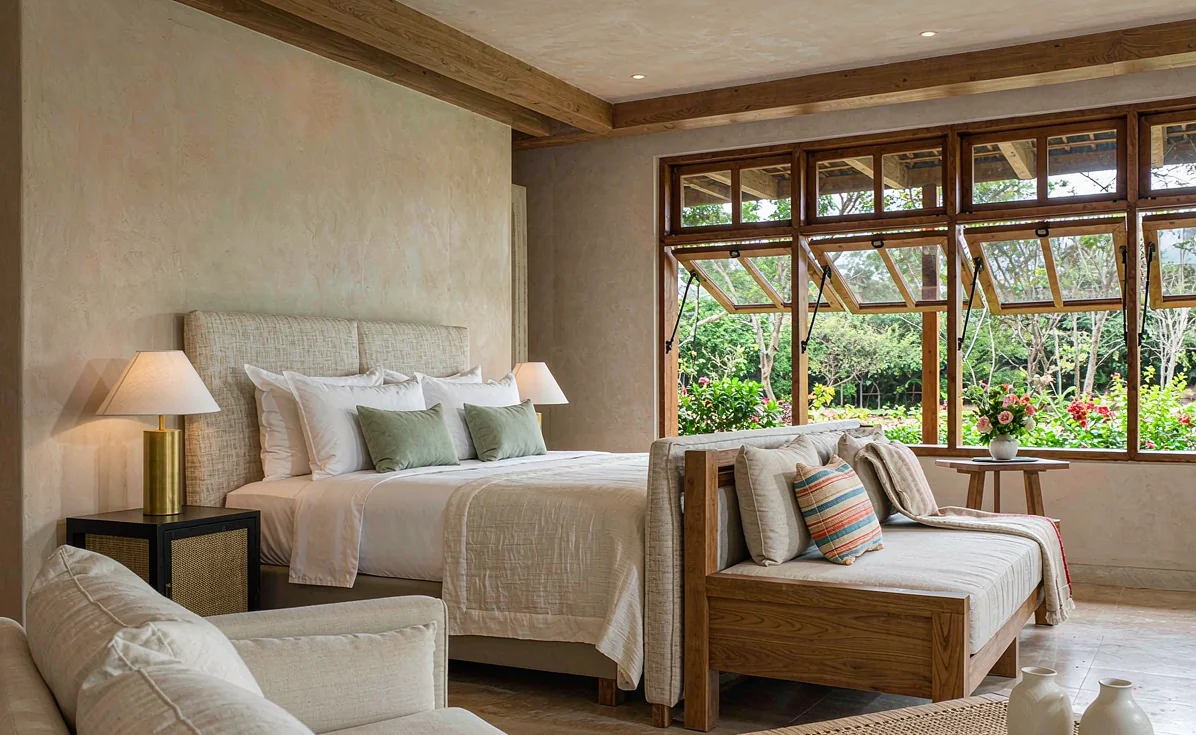
A hospitality suite — hotels and resorts are the single largest enquiry type across the region.
2. Which project types dominate
Hospitality and residential carry the volume: hotels, private villas, apartment blocks and mixed-use complexes, with the occasional fuel station and commercial fit-out. That mix is precisely why the recurring shortlist leans toward heat, humidity and dust resilience rather than cold-weather performance. A villa in Addis, a resort in Juba and an apartment block in Nairobi all ask for the same thing at the material level — surfaces that do not stain, openings that do not leak, and fittings that do not corrode in the first rainy season. Our five-market specification walkthrough covers how we tune this per country.
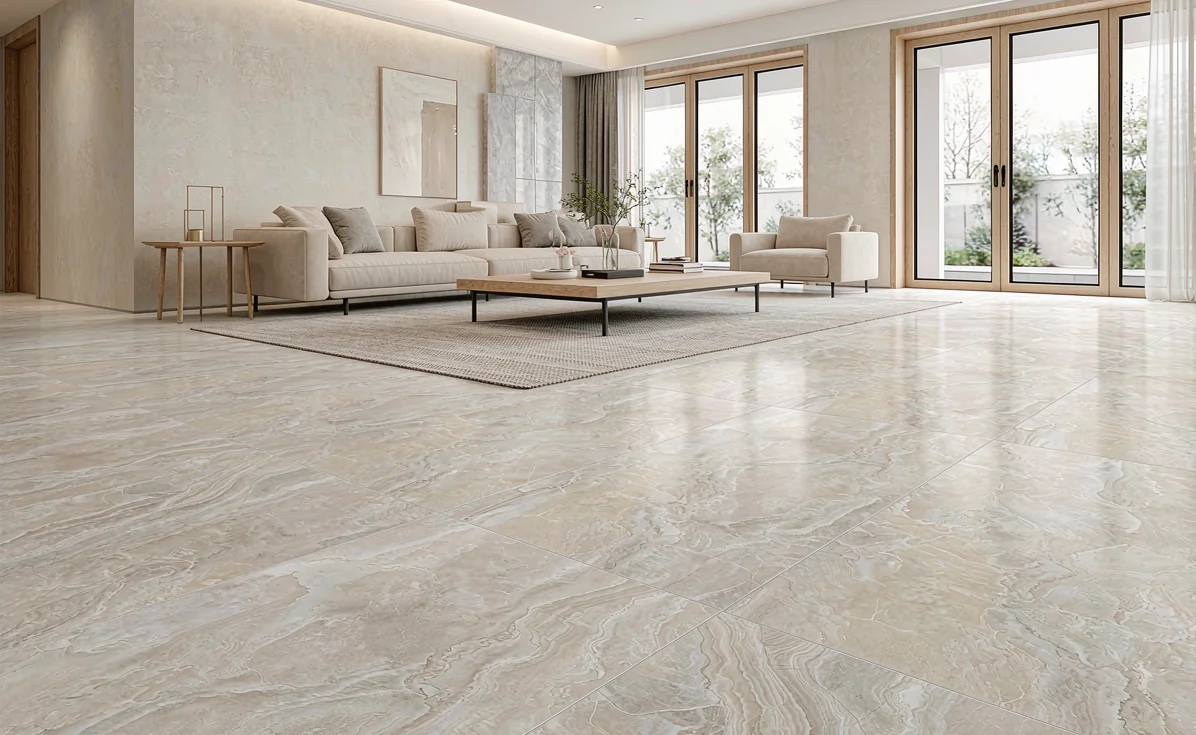
Flooring is the most-specified surface category after furniture — large-format porcelain leads.
3. The materials that keep winning
Strip the enquiries back and a shortlist emerges. Thermal-break aluminum openings (we detail these in the window and door guide) appear on nearly every hotel and villa. Large-format porcelain or sintered stone takes the floors, vanities and even facades because full-body tile resists staining where laminate and engineered stone fail. Marine-grade 304/316 hardware and fittings survive the corrosion cycle. And furniture built on a raised plinth — the point we make in the furniture material guide — outlasts pieces that sit flat on a damp floor. None of this is exotic; it is the boring, climate-honest baseline that keeps projects out of the service log.
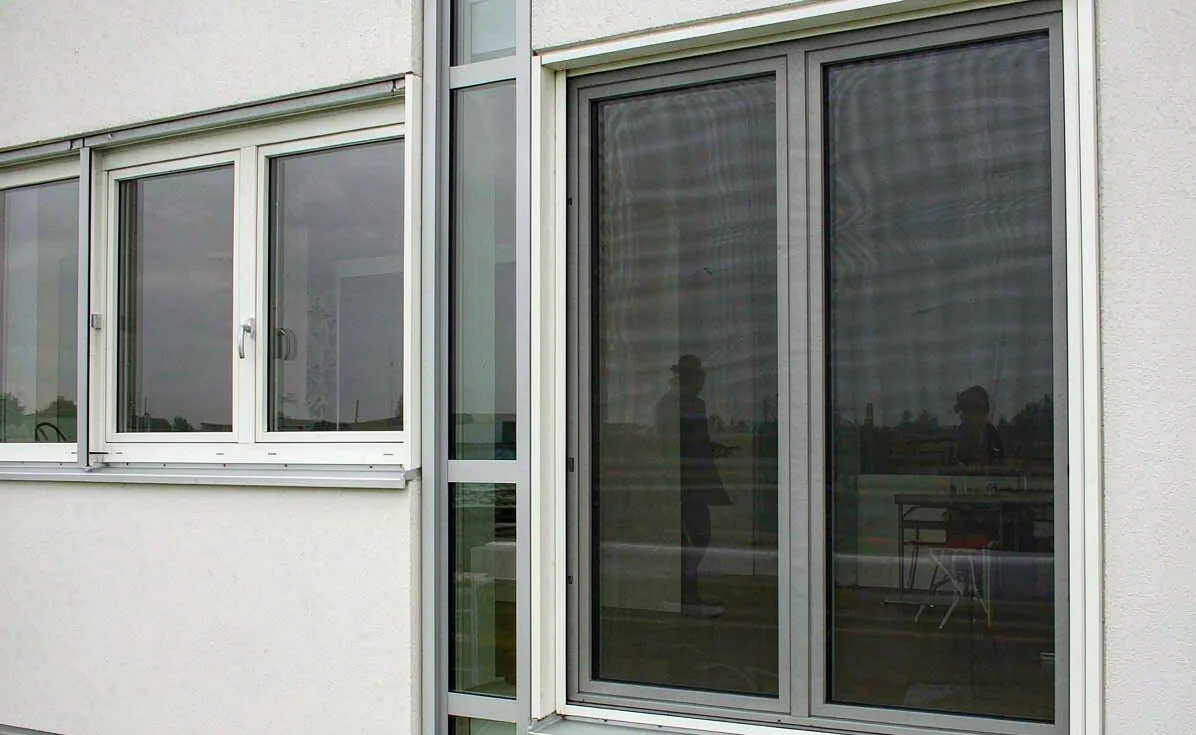
Thermal-break aluminum openings — the most recurring specification across the enquiry set.
4. How to read the mix as a specifier
Use the recurring shortlist as a climate-resilient baseline, then tune it per site. Step hardware up to 316 at the coast. Lift timber and upholstery off the floor in humid rooms. Specify full-body porcelain where staining is a real risk (kitchens, vanities, resort lobbies). And freeze the schedule early — most of the cost and most of the failures are decided at the material stage, long before the first fixer arrives. The enquiry data is not a trend report; it is a pre-approved bill of materials for the climate.
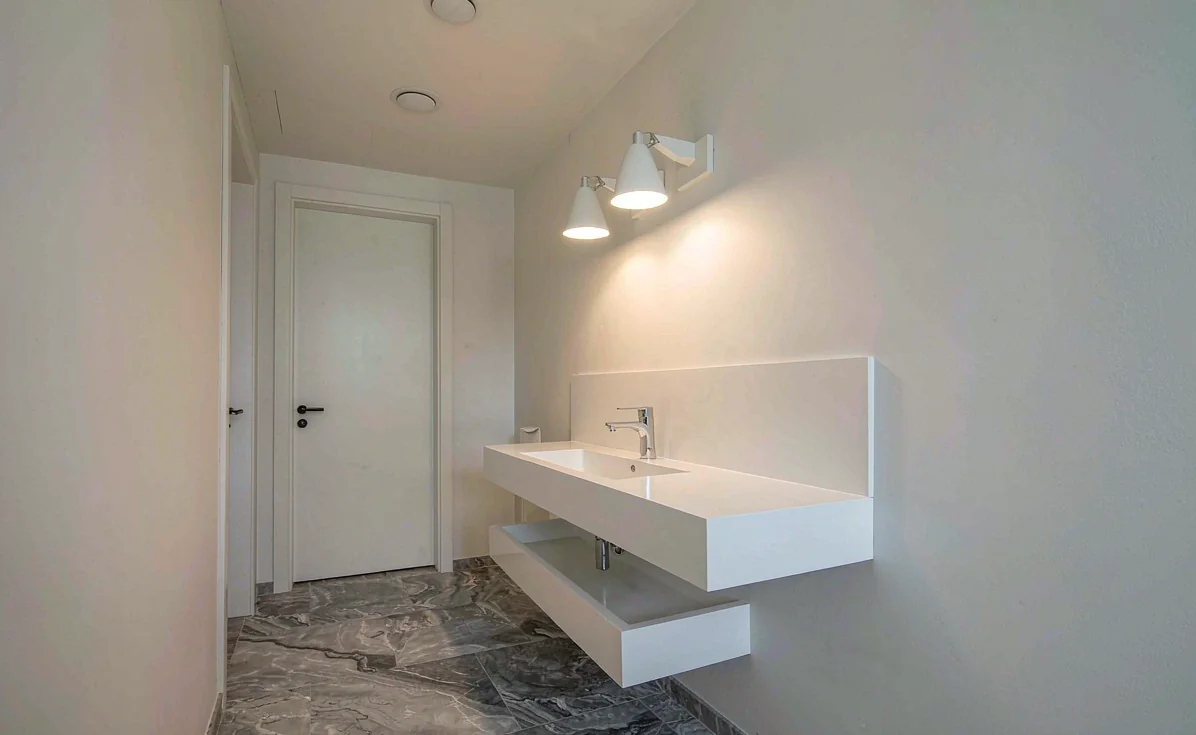
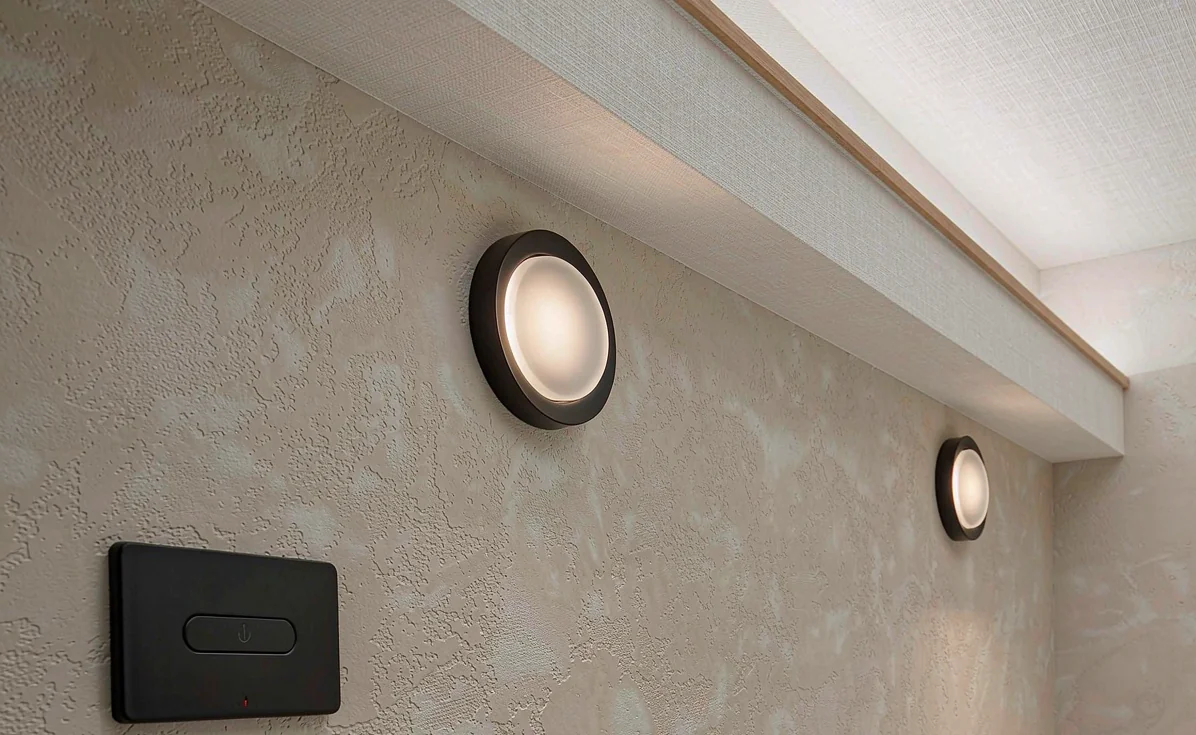
Sanitary and fittings — marine-grade hardware recurs across the enquiry set.Lighting and switches — a constant in apartment and complex fit-outs.
The recurring specification shortlist (from 596 enquiries)
Thermal-break aluminum openings with low-E glazing and 316 hardware at the coast.
Full-body large-format porcelain / sintered stone on floors, vanities and facades.
Marine-grade (304/316) fittings, locks and sanitary across humid sites.
Furniture on a raised plinth, 8–10% moisture-content timber, off the floor.
Moisture-resistant wall panel and acoustic lining for apartments and complexes.
Recurring specification shortlist from 596 East African enquiries
Material
Where it shows up
Climate driver
Our minimum spec
Aluminum openings
Hotels, villas, offices
Heat gain, dust
Thermal-break, low-E, 316 hardware
Porcelain / sintered stone
Floors, vanities, facades
Humidity, staining
Full-body, <0.5% water absorption
Marine-grade hardware
Doors, sanitary, kitchens
Corrosion
304/316, 60 micron coat
Raised-plinth furniture
Hospitality, residences
Termite, damp, cleaning
8–10% MC timber, lift-off-floor
Wall panel & acoustic
Apartments, complexes
Speed, noise
Moisture-resistant core
Planning a project in the region?
Send us your drawings or a short brief and we will return a climate-matched material schedule with the recurring shortlist tuned to your site — typically within one working day.
Ethiopia leads with 223 recorded enquiries and Kenya follows with 141; South Sudan (50) is the third concentration and skews heavily to hotels and resorts. The rest of the demand is spread thinly across Rwanda, Uganda, Ghana and the Gulf.
What project types drive these enquiries?
Hospitality and residential dominate — hotels, private villas, apartment blocks and mixed-use complexes, with the occasional fuel station and commercial fit-out. That mix is what pushes the material shortlist toward heat, humidity and dust resilience rather than cold-weather performance.
Which materials keep recurring across these projects?
Thermal-break aluminum openings, large-format porcelain or sintered stone, marine-grade (304/316) hardware and fittings, and furniture built on a raised plinth. The same five or six lines show up project after project because they survive the climate.
How should a specifier read this enquiry mix?
Treat the recurring shortlist as a climate-resilient baseline, then tune it per site: step hardware up to 316 at the coast, lift timber off the floor in humid rooms, and specify full-body porcelain where staining is a risk. Lead with what the climate demands, not with the catalogue.