Specifying Sanitary Ware & Bathroom Fittings for Hot, Humid Climates.
Published: September 28, 2026
Vitreous china, coastal-grade brassware and the wet-area detailing that keeps a bathroom hygienic under heat, dust and humidity.
In the Gulf, East Africa and the wider equatorial belt, the bathroom is the hardest-working wet room in the building — always humid, often hot, and in many projects fed by hard borehole water. It is also where cheap fittings give themselves away fastest: a pitted tap, a crazed basin or a permanently damp shower tray within a season or two. The specification that avoids that is not expensive; it is sequenced. In our From Concept to Completion process the sanitary schedule is fixed alongside the tiling and the joinery, because the waste positions, the tile setting-out and the vanity line all key off it. Here is the decision framework we use with our own project clients, written for owners and project managers who need to read a sanitary schedule without a plumbing contractor beside them.
1. Start with the body: vitreous china, not cheap ceramic
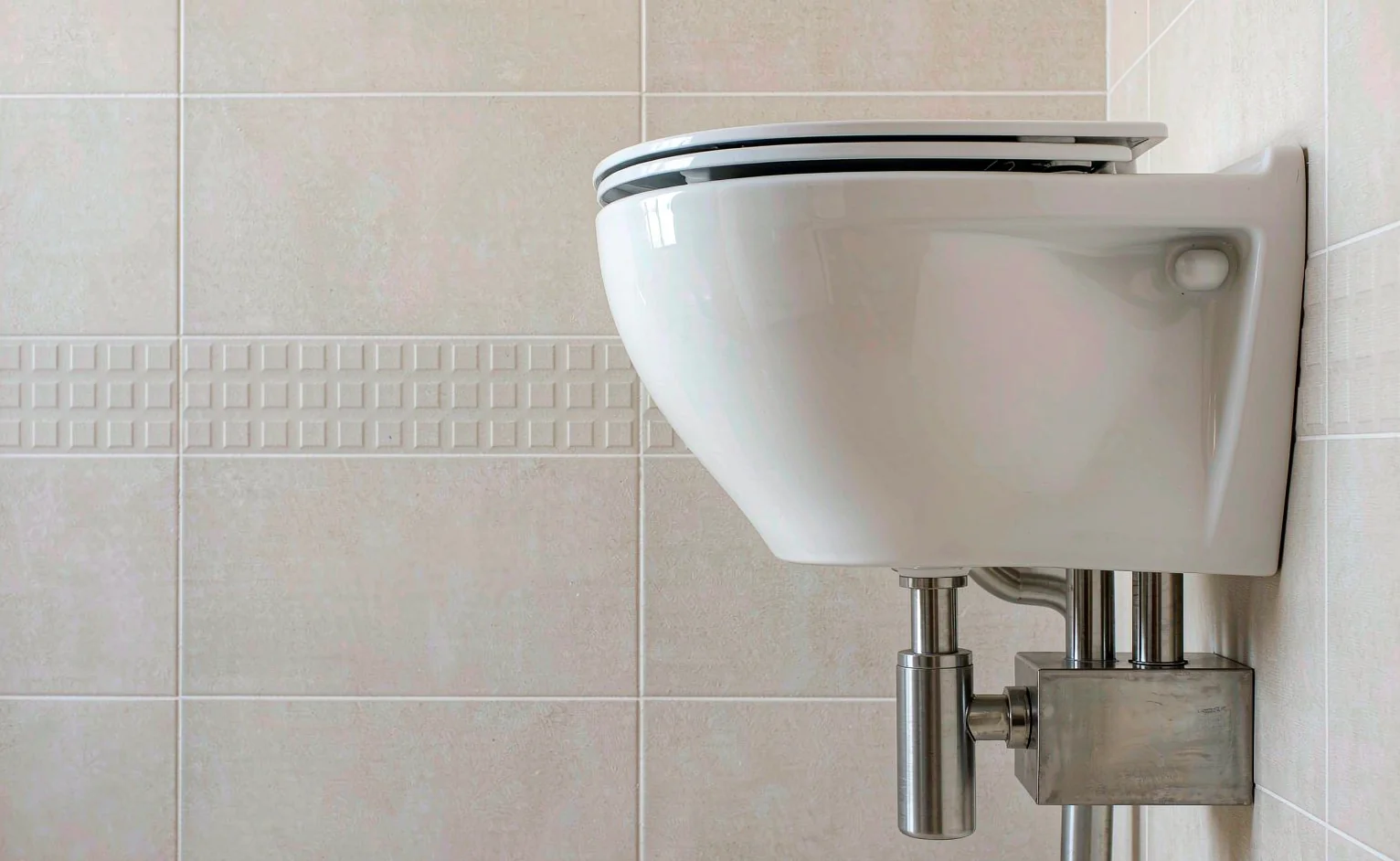
The number that decides a WC or basin is water absorption, and it decides the body. Vitreous china is fired hot and dense, so absorption falls below 0.5% — the glaze bonds to a stable body that will not craze, stain or crack in constant humidity. Standard ceramic absorbs several times more, stays dimensionally restless and tends to craze over years of thermal cycling. For hot, humid climates we specify vitreous china for every WC, basin and bidet, with a fully glazed, rimless or semi-rimless pan that leaves no hidden ledge for bacteria. Wall-hung pans are our default in hotels because they free the floor for cleaning and hide the pipework, but they demand a reinforced concealed frame rated for the load — we specify 400 kg frames fixed into structure, never into a lightweight partition. In our completed hotel and villa projects the sanitary schedule names the body, the absorption, the frame load rating and the trap type together, never just a shape and a finish.
A wall-hung vitreous china pan on a concealed frame — dense body, no rim ledge, and a floor that mops clean underneath.
2. Brassware and finishes that survive humidity and salt air
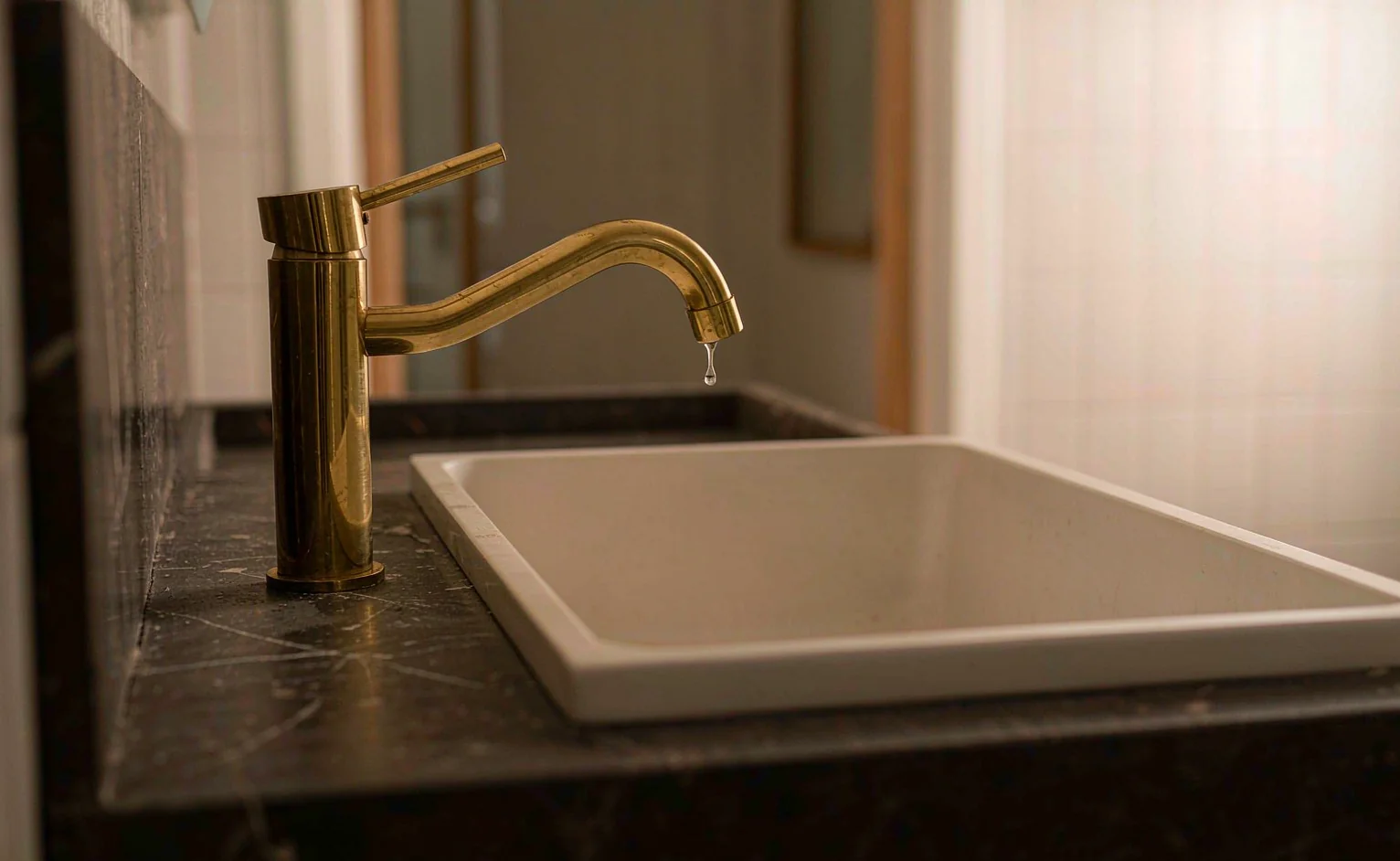
Taps and mixers fail long before the china does. The two failure modes are a weak body and a thin plated finish, and both are hidden at the point of sale. We specify solid brass bodies — never zinc-alloy, which corrodes from the inside out — with a plated finish of at least 8–10 microns of nickel under 0.2 microns of chrome, or a harder PVD coating that keeps its colour and resists scuffing far better than conventional plating. On coastal sites and salt-air elevations we step up to PVD or 316-grade marine finishes, because a chrome tap a few hundred metres from the sea pits within a year. Inside, the cartridge matters as much as the shell: a ceramic-disc cartridge with a replaceable seal gives years of drip-free service with hard water, where a cheap rubber washer hardens and drips within months. For hotels we specify thermostatic mixers with anti-scald stops and a single-lever flow, so guests cannot be scalded by a pressure surge on a shared riser. Every mixer is listed by brand, finish grade and cartridge type in the BOQ, because “chrome tap” on a drawing is not a specification.
A solid-brass basin mixer on stone — the body and the finish grade, not the look, decide whether it survives the coast.
3. Wet-area detailing: slip, tanking and drainage
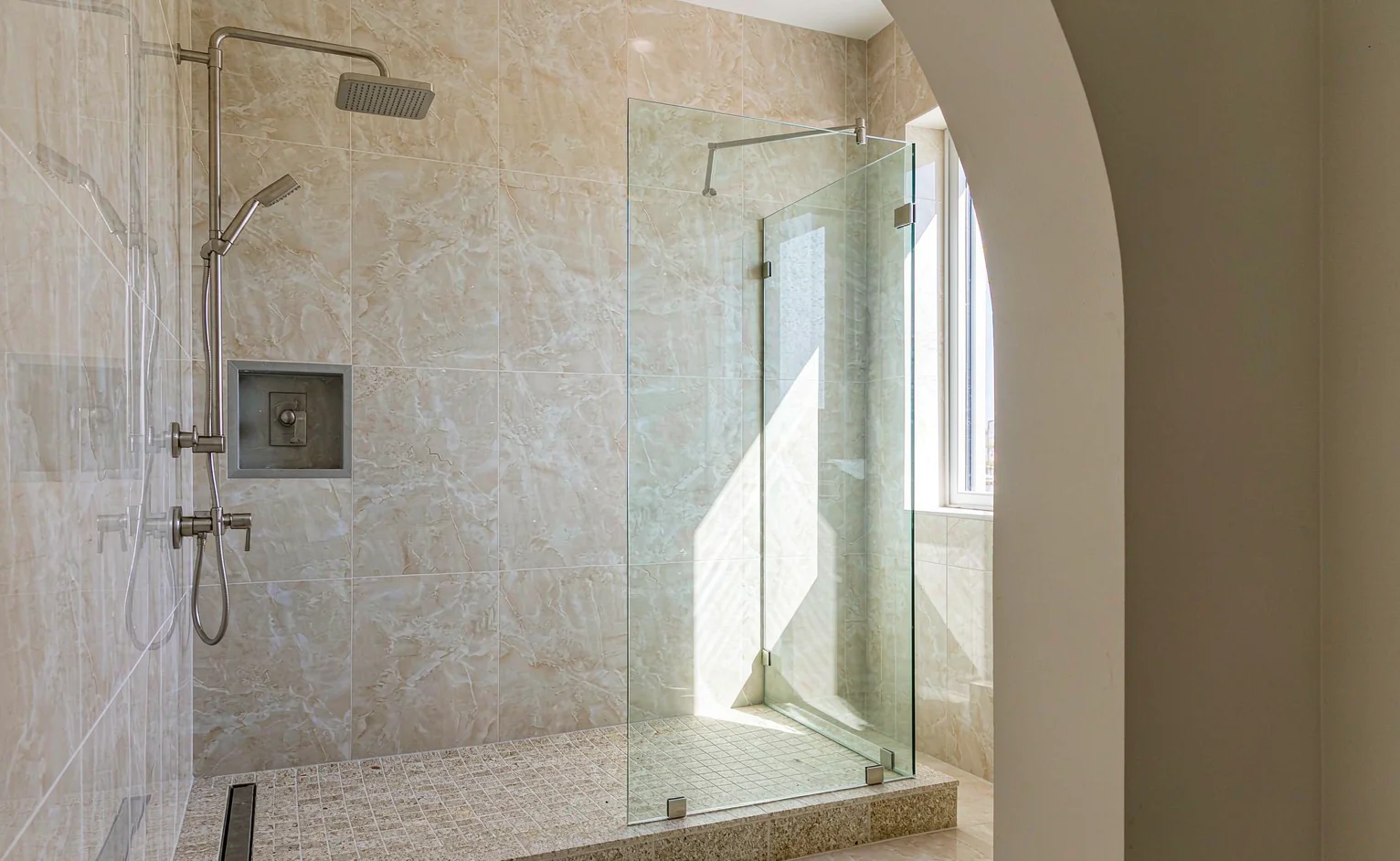
A bathroom is only hygienic if the water leaves it. Three details decide that. First, slip: a polished floor is a hazard under a shower and at the wet entrance, so we specify a matt, structured shower floor rated R11 or above, and keep polished surfaces to dry walls only — the same logic as our porcelain and ceramic tile guide applies here at close range. Second, tanking: a continuous waterproofing membrane behind the tiles and up the walls of the wet zone, with a sealed floor-to-wall fillet, because grout alone is not waterproof and moisture quietly saturates the screed and the room below. Third, drainage: a linear drain set to a continuous fall, sized so the floor empties fully with no standing water, because trapped water plus no airflow is what grows mould — the fan matters as much as the finish. For shower enclosures we specify 8–10 mm toughened safety glass with an easy-clean coating, supported on proper hinges rather than a friction-fit channel that traps dirt. Every junction follows the installation and junction detailing walkthrough we hand to each site team.
A walk-in shower on an anti-slip stone floor with a linear drain and 10 mm tempered glass — drained fully, tanked beneath, easy to clean.
4. Water, pressure and the reality of the market
The last decisions are about the water itself. In many of our markets the supply is hard and mineral-rich, and scale is the silent killer: it clogs aerators, stiffens cartridges and stains any finish that is not easy-clean. We specify removable, descalable aerators, scale-resistant ceramic cartridges and a mirror with a demister rather than a coated film that fogs and peels. Pressure is rarely stable — building-supply stores, booster pumps and rooftop tanks all drift — so thermostatic mixers and pressure-balancing valves keep the hot and cold in step and stop the shower going scalding-then-cold when a nearby tap runs. Where supply is intermittent, the bathroom is designed around storage and sensible falls rather than assuming constant mains pressure. And because a bathroom should be easy to maintain in a dusty climate, we keep the fittings serviceable from the room side: every cartridge, seal and waste assembly can be reached and replaced without breaking tile, which is the difference between a ten-year bathroom and a costly refurbishment. How that same material discipline plays out market by market is set out in our five-market specification guide.
Four-point checklist before ordering sanitary ware for a hot, humid project
Specify vitreous china (absorption under 0.5%) for WC, basin and bidet; wall-hung on a 400 kg concealed frame.
Use solid brass bodies with 8–10 microns of nickel, PVD or 316-grade finishes on coastal sites.
Rate the shower floor R11 or above, tank the wet zone fully and drain with a linear drain on a continuous fall.
Fit ceramic cartridges, replaceable seals and serviceable-from-the-room fittings that descale and repair easily.
Sanitary ware specification — quick comparison
Element
What we specify
Why it matters
Minimum spec for hot climates
Body
Vitreous china, absorption <0.5%
No crazing or staining in humidity
Rimless pan; ceramic for dry surfaces only
Mounting
Wall-hung on concealed frame
Clean floor, hidden pipework
400 kg frame fixed into structure
Brassware
Solid brass, ceramic cartridge
Survives hard water and daily use
8–10 microns Ni; PVD / 316 at the coast
Wet area
R11+ slip floor, full tanking
Stops falls and hidden damp
Linear drain on a continuous fall
Supply
Thermostatic / pressure-balanced valve
Stable temperature under surge
Descalable aerators; serviceable fittings
Planning a project?
Share your drawings or sanitary schedule and we will return an itemized sanitary ware and brassware BOQ with body, frame, finish and drainage details — typically within one working day.
Should I specify vitreous china or standard ceramic for bathrooms in a hot, humid climate?
Specify vitreous china for WCs, basins and bidets. It fires to a water absorption below 0.5%, so the body is dense and the glaze will not craze or stain in humidity; standard ceramic absorbs far more and belongs only on dry decorative surfaces. For the wall surfaces behind it, see our guide on Specifying Porcelain & Ceramic Tiles for Hot, Dusty Climates.
Which tap and shower finishes survive humidity and salt air?
Solid brass bodies with a thick chrome, nickel or PVD finish. Zinc-alloy bodies and thin plating pit within a year at the coast, so marine sites should step up to 316-grade or PVD brassware with ceramic cartridges. The same metal-and-hardware logic governs the openings in Specifying Aluminum Windows & Doors for Hot Climates.
How do I keep a wet room safe and free of mould?
A full tanked waterproofing layer, an anti-slip shower floor rated R11 or above, a linear drain with a fall to it, and mechanical ventilation. Trapped water and no airflow — not the fittings — is what grows mould. The falls, drains and junctions are detailed in Installing Cabinetry, Wardrobes & Metal Screens and sit on the floor build-up covered in Choosing the Right Flooring for Tropical Climates.
Where does sanitary ware usually fail in these markets?